BLOG
Insights on 360° feedback and leadership development

BLOG
Insights on 360° feedback and leadership development

A 360 degree feedback report shows how a person’s behaviors are seen by the people who work with them: their manager, peers, direct reports and others, side by side with their own self-rating. A good report doesn’t stop at averages.…

Pick up a typical 360 survey and there’s a good chance you’ll find a question like this one: “Is a strategic thinker.” It sounds like leadership. It fits neatly in a competency model. And it asks a direct report to…

Search for the benefits of 360 degree feedback and you’ll find long lists: objective evaluation, less bias, a more open culture, better teamwork. Some of that can happen. Some of it is hard to trace back to a survey. And…

A leader opens a 360 report in March and picks two behaviors to work on. By May, the report is a bookmark. By September, a colleague might ask how it’s going, and the honest answer is “I think better?” Our…
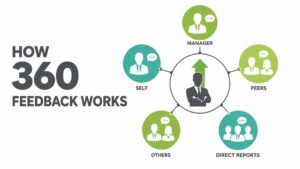
Most people have a picture of how they come across at work. 360 degree feedback tests that picture against how colleagues actually experience them. Done well, it’s one of the most useful development tools an organization has. Done poorly, it…

Senior managers and directors live in a strange middle. They sit too high in the org chart for first-line management training to fit, and too far from the C-suite for executive coaching frameworks to apply cleanly. They have to plan…

Most 360 feedback reports get read once and shelved. The leader scans the file, lingers on the lowest score, takes a deep breath, and closes it. By month two, the document is buried in a folder no one opens. By…

360 degree feedback has a unique way of surfacing patterns leaders may have rationalized, minimized, or simply never seen. When feedback aligns across peers, direct reports, and managers, it can reveal a truth that’s difficult to dismiss—and even harder to…

Organizations invest heavily in leadership development, yet many find that generic leadership classes don’t drive real improvement. These programs cover a wide range of skills—communication, decision-making, conflict resolution—but they often fail to help leaders focus on the specific areas they…

The shift to remote and hybrid work has transformed the way teams collaborate, communicate, and develop leaders. As organizations navigate this new landscape, one challenge stands out: how to effectively conduct 360-degree feedback in a dispersed workforce. Why Traditional Feedback…