BLOG
Insights on 360° feedback and leadership development

Insights on 360° feedback and leadership development
Taking the reins at one of the largest and most influential companies in history is an undoubtedly daunting assignment. Following in the footsteps of one of the most important figures in modern history only adds to the challenge. Satya Nadella,…
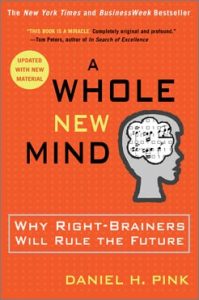
Daniel Pink opens our minds and shows us new possibilities in this entertaining book about how the right brain can contribute in a world that has long been devoted to left brain thinking. He begins by reviewing how the two halves of the brain work: the left hemisphere is sequential, analytical, verbal, and detail-oriented, while the right hemisphere processes information simultaneously, specializes in context, understands metaphor and nonverbal cues, and synthesizes the big picture. Pink's thesis is that right-brain directed thinking, so often disdained and dismissed, will increasingly determine who soars and who stumbles.
He explains the reasons behind the shift from left to right brain dominance: abundance, Asia, and automation. In our abundance, we acknowledge that our left brains have made us rich. We can buy just about anything we want at a minimal price. This puts a premium on the aesthetic. For business, it's no longer enough to create a product that's reasonably priced and adequately functional. Now it must be beautiful, unique, and meaningful to be competitive.
Change is good…except when it’s bad. One of the most relied upon adages in any endeavor is that at some time things will change. Oftentimes change is visited upon a company by unforeseen outside influences; a market contraction, an event that disrupts the supply chain, or the sudden departure of valuable talent. Other times, change within an organization can come voluntarily, as a necessary means for survival or to move in a direction that will bring future prosperity and a strengthened position within a market. In either case, leadership during a time of transformation will make the difference between a successful shift and a disastrous one.
Quality leadership requires managers who are not only prepared and adept at handling matters during the sublime, but leaders who are agile and composed enough to navigate through turbulence. The keys to effective management during times of transformation are varied, with each leadership trait playing a critical role in the effective stewardship of the company through the turmoil of change. To ensure your company has what it takes to survive and even thrive through the adversity that transformation can bring, pay diligent attention to a few crucial leadership attributes that will serve you well and lead your company back to a more serene environment.
As the tide continues to turn and the economy steadily (if sluggishly) rebounds from a historically trying recession, the outlook for most companies shifts toward efforts that will ensure their ability to take advantage of a more fruitful marketplace. One of the most important avenues to pursue involves training and an overall initiative of investing in employees. While the potential array of investment strategies varies based on industry and other factors specific to certain enterprises, 2014 is a time in which investing in the development of employees serves as an invaluable tool for prosperity going forward. Three of the most important factors employee training investment can affect are business efficiency, retention of employees and overall cost-effectiveness.
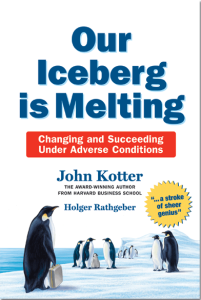
When was the last time a business book made you smile? I believe this book will put a smile on the face of even the most discouraged business person. It's a fable about a group of penguins whose iceberg may or may not be melting. If it melts it will break apart and leave the group homeless, and many penguins would die. Only Fred can see the potential disaster, but he's a nobody in the penguin colony. Fred finally gets an audience with Alice, one of the leaders, and he shows her the fissures and other symptoms of melting. Alice is amazed that she had managed to ignore the signs, and she takes the problem to the leadership council.
The leaders have a variety of reactions, like leaders in all organizations. Some of them debate the validity of Fred's statistics. One falls asleep. Another nods at everything because he is uncomfortable with numbers, but doesn't understand a thing. In desperation, Fred constructs a model of their iceberg that shows the problem, but even he cannot guarantee 100% that the iceberg is melting, only that it appears to be. The head penguins realize that they need to tell the rest of the colony about this potential disaster. They call a general meeting, with the purpose of reducing complacency and increasing urgency.
"If you have a positive attitude and constantly strive to give your best effort, eventually you will overcome your immediate problems and find you are ready for greater challenges." - Pat Riley
Motivation is one of the most difficult actions to maintain on a consistent basis. When dealing with a group of individuals, this problem intensifies, and the business can lose out on new potential sales and lose longtime customers. In order to ensure steady growth and maintain customer satisfaction, team members have to work hard both together and individually. This is where team leaders find the biggest challenges. They don't understand how to consistently keep their teams motivated. Their current practices aren't working and what's good as an industry standard may not work well for them. Surprisingly, turning things around isn't that hard -- in fact, it's quite simple.
What makes Richard Branson so cool? For starters, he built the first airline to sell tickets into space with Virgin Galactic, he was chosen by young entrepreneurs as the Ultimate Business Role Model and he’s probably the only CEO you can name who has won a Grammy.
To call his management style “unconventional” would be a gross understatement. For example, he promotes a hands-off approach to management that encourages employees to make their own decisions. Failure is taken in stride as proof that his people are really stretching themselves. For another, he has made it clear that brand awareness is a much higher priority than profits. It sounds like a recipe for disaster, but there’s no question he has been successful. The Virgin brand has proven itself successful across a range of industries, from a record shop, to an airline, to a telecom provider and 400 other companies. His personal wealth is estimated over $4 billion and he shows no signs of slowing down. His supporters say he has astounding foresight. His distractors say it’s just dumb luck.
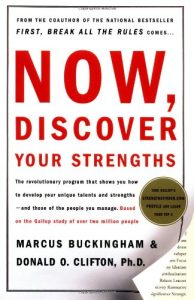
One of my favorite things about coaching people on their 360 feedback results is talking to them about their strengths. Invariably, when managers have studied their reports before talking with me, they are very clear about what they see as their weaknesses. They almost never notice or take stock of their strengths, which are just as obvious to me as their weaknesses are to them. So we spend some time identifying their strengths and talking about how these can be leveraged to manage weaker areas that might be impacting their performance and slowing their careers. People are usually grateful for these insights, which they might not have gotten on their own.
I was interested in reading this book because I hoped it would be one I could recommend to people when they receive their feedback reports or who are learning to lead and manage others. Unfortunately, it didn't live up to my hopes, even though it has some useful information. Let me address the book's strengths first.
Finding an ideal work-life balance can be tricky. The demands of both can take a toll for those who are not careful. Putting in long hours at the office and then long hours commuting, shuffling kids to activities and maintaining household responsibilities can leave even the most energetic people exhausted and burned out.
This is where balance comes in. The ideal work-life balance allows for both areas of life to co-exist peacefully, with neither spilling over into the other. The ability to be fully present at work, without the distractions of home life seeping in is essential to performing at one's best. By the same token, the ability to leave work at work instead of taking it home is important, and means the difference between a full and happy life and a stressed and overwhelming one.
Extroverts are the new black in business, but don’t write introverts off just yet. There are times when the thoughtful, reflective leadership style is an effective alternative to outgoing, gregarious extroversion. Conversely, there are times when taking the bull by the horns and expressing one's thoughts makes all the difference. Look at the best practices for mitigating the limitations akin to both managing styles.
Surprisingly, according to one Harvard study, which style is best for your business depends largely on your subordinates. When staffers are eager to share new ideas, address problems or suggest new solutions, introverts will foster an innovative, creative company culture.