BLOG
Insights on 360° feedback and leadership development

Insights on 360° feedback and leadership development
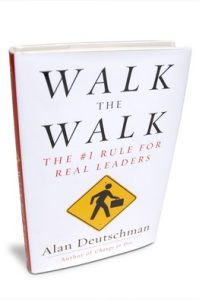
by Alan Deutschman. (2010). New York: Portfolio/Penguin. 182 pages.
Reviewed by Diane Byington, Ph.D.
Deutschman starts out with a little-known story about Martin Luther King, Jr. In 1962, King was speaking at a gathering of the Southern Christian Leadership Conference and, in the middle of his speech, a white man jumped on the stage and punched him in the face several times so hard that he staggered backward and spun half around. He managed to turn back to face his assailant and then he dropped his arms, refusing to defend himself. The man was pulled away, but King insisted on talking to him privately, and he refused to press charges. King's speech at that meeting was on nonviolence, but his refusal to fight back inspired his followers far more than his eloquent words.
Deutschman's proposition is that we need to see our leaders "walking the walk" as well as "talking the talk" if we are going to be willing to follow them through difficult circumstances. As a journalist, he has a suitcase full of stories about leaders who successfully walked the walk, and as a result made significant changes in their environments. The stories were fun, and included tales that ranged from Eleanor Roosevelt to Jeff Bezos of Amazon, and a host of others. Reading these stories was the best part of the book.
It seems like society is canted toward extroverts—the high-energy, fast-pace-loving people who are adept at working a room, making connections, being social. Based on their comfort with being around other people and their ability to slide easily into teamwork situations, extroverts would seem to be shoo-ins for the majority of leadership positions. And, according to studies noted by Jennifer Kahnweiler in her book, The Introverted Leader: Building on Your Quiet Strength, it’s true—extroverts are in the majority of leadership roles. But not by as much as you might think. Interestingly, about 40% of leadership roles are filled by introverts.
Many successful introvert leaders are household names. Bill Gates, Eleanor Roosevelt, Jeff Bezos, Rosa Parks, Warren Buffett, Al Gore. And the list goes on. But what makes these people so good at leading, especially when it would seem that the introvert is too reclusive? And what can extrovert leaders learn from their approach?
To start, introverts are highly skilled at listening. They tend not to monopolize social settings and instead place value on what the other party brings to the conversation; they are more receptive to ideas that aren't their own and then more willing to employ them.
written by Morag Barrett – Founder and CEO of SkyeTeam
None of us achieve success alone, the world of work is probably the biggest team sport any of us will ever take part in, and yet, at times, it can feel like our coworkers are on the opposing team rather than playing on the same side and for the same company. Relationships matter.
When mistakes happen, goals are missed, and when careers derail, it’s not usually about a lack of competence or expertise. It’s usually because of mismanaged relationships. The quality and health of our professional relationships has a direct impact on the output of our work, our morale and motivation, and in some cases our reputation.
Many Americans dream of working less, imagining how they might use the extra hours outside of the workplace—perhaps envisioning spending more time with family, taking care of more chores around the home, or devoting time to a new hobby, sport or even a new path in higher education. Lately, some pretty powerful people are thinking the same—and have some good arguments for why American businesses should move in that direction.
In general, the accepted 40-hour workweek has been set since 1938, when then-president Franklin D. Roosevelt signed into place the Fair Labor Standards Act. In the decades since, some have predicted that technology would overrun our need to work long hours. Recently, some have compared our workweek standards to those of other countries and have wondered what the impact of reducing American working hours would be.
Embattled NFL Commissioner Roger Goodell is learning about it—the fallout that comes from losing trust. In his case, he’s losing it because of missteps, unclear responses to issues, and potential lies. But he’s not just facing the fallout from the football organization solely, he’s facing it from the true people who pay him: NFL fans.
Trust is the cornerstone of all good relationships, both inside and outside of the office. Notwithstanding, it can be human nature to make mistakes—inadvertently or even unknowingly at times. At which point begins the task of rebuilding employees’ confidence in worthiness and ability. It can be a difficult and long journey, but the good news is that it’s not impossible. If you find yourself needing to re-create a platform of trust with your employees, here are some things to keep in mind.

by Al Watts. (2010). Minneapolis, MN: BRIO Press. 170 pages.
Reviewed by Diane Byington, Ph.D.
Reading this small book is like snuggling up with a friend next to a fire on a winter evening, sipping a glass of your favorite wine, and listening to him tell you the accumulated wisdom of his life. Al Watts is a veteran consultant who focuses on organizational integrity and also provides dynamite team-building lessons on board his sailboat. He combines these two passions in his new book.
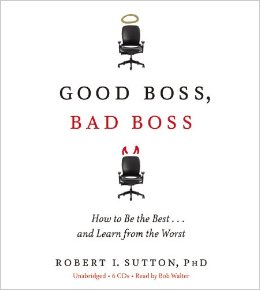
by Robert I. Sutton. 2010. New York: Business Plus. 252 pages.
Reviewed by Diane Byington, Ph.D.
If you're a boss, you'll probably want to have this book on your bookshelf, along with its predecessor, the best-seller The No Asshole Rule. After achieving success with the first book, Sutton decided to research and write about what distinguishes good bosses from bad bosses. He does an excellent job combining research, personal experience, and common knowledge into a readable and helpful set of suggestions for how to be a good boss.
Accordingly, the book is filled with lists telling you, in specific terms, how to succeed as a boss. Casually flipping through the pages, I see lists that include: The 11 Commandments for Wise Bosses, How to Lead a Good Fight, Tricks for Taking Charge, and A Recipe for an Effective Apology. I especially liked that one.
Good leaders should want their employees to not only succeed but also push their limits and raise the bar. One way that can help employees get there, is through regular goal-setting. This can be challenging because often times, employees don’t understand the overarching visionand goals of a company or organization. So it’s important that all players are aligned on the corporate vision in order to effectively start with the goals process. With that firmly in place, a manager can try to push his or her employees by suggesting stretch goals—the type of target that may seem impossible.
There are differing views of the efficacy of stretch goals. Some feel that setting the bar too high can cause dejection, making people feel like they’re getting nowhere and that they’ll never achieve the mark. Some studies even suggest that, with impossible goals in place, people become more and more dishonest or even ruthless in their pursuit of results—which has been shown to cost companies billions each year. Others, however, feel that, particularly for top performers (who are already driven to achieve and succeed), stretch goals can be motivational, and a huge reward in and of themselves once they are achieved.
Are you a micromanager? Or—perhaps worse—you may be one and not realize it?
Here are 5 signs you might be too involved in your employees’ work:
- You rarely delegate (and when you do, you are entirely too nervous about it)
- You find yourself spending more time overseeing (or even doing) other people’s projects than on getting your own done
- You nitpick the details (like putting the cover sheets on the TPS reports) and neglect the 30,000-foot view
- You reassign projects—to yourself—before they’re done
- You discourage autonomy and decision-making at any level under yours
Adding leadership competencies to your manager’s skills Many organizations are struggling with the transition into a global economy, forcing them to flatten their management hierarchy. As a result, today’s managers are faced with increased responsibilities as they take on the…