BLOG
Insights on 360° feedback and leadership development

Insights on 360° feedback and leadership development
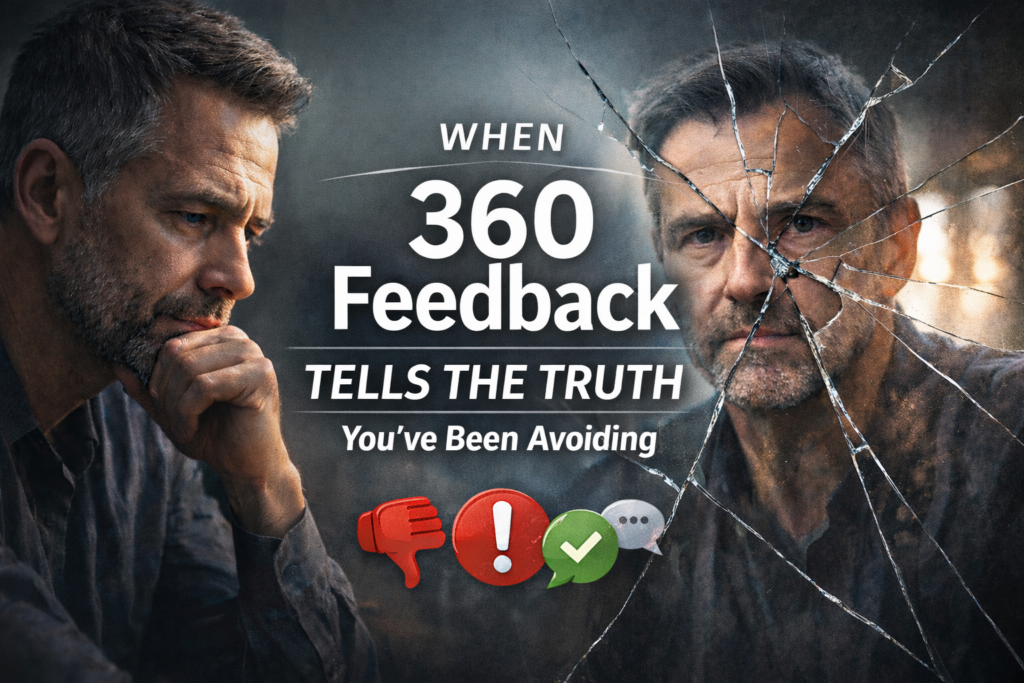
360 degree feedback has a unique way of surfacing patterns leaders may have rationalized, minimized, or simply never seen. When feedback aligns across peers, direct reports, and managers, it can reveal a truth that’s difficult to dismiss—and even harder to ignore.
This is where 360 feedback becomes powerful. And uncomfortable.
Unlike traditional performance reviews, 360 feedback doesn’t rely on a single perspective or moment in time. It aggregates perceptions from the people who experience a leader’s behavior day after day.
When multiple raters independently point to the same strengths—or the same gaps—it reduces ambiguity and removes plausible deniability.
In other words:
This is often the moment leaders realize the feedback isn’t about intent—it’s about impact.
Resistance is rarely about arrogance. More often, it stems from:
Without structured reflection and support, leaders may dismiss feedback as unfair, inaccurate, or politically motivated.
That’s why how feedback is delivered—and supported—matters as much as the data itself.
Honest 360 feedback only creates value when it leads to behavior change. Organizations that pair feedback with structured follow-up—such as coaching and development planning—see far stronger outcomes. (Related: Wrapped Up Your 360 Assessment—What’s Next?) At TruScore, effective development starts with three principles:
Feedback should surface the few patterns that matter most, not overwhelm leaders with noise. Research consistently shows that overly complex reports reduce engagement and follow-through. (Learn more: Why Do-It-Yourself 360s Fail)
Leaders need help interpreting why patterns exist before jumping to solutions.
Real change happens through follow-up, coaching, and continued feedback—not a one-time report. This is why many organizations integrate 360 feedback into broader leadership development and coaching initiatives. (Explore: Unlocking the 360 Assessment Process)
When leaders feel supported rather than judged, they are far more likely to lean into the truth instead of resisting it.
The most valuable insight in a 360 report is often the one a leader least wants to see.
Handled well, that insight becomes a turning point:
Handled poorly, it becomes another ignored document.
360 feedback doesn’t force change—but it creates a mirror that’s hard to look away from.
This e-book uncovers the thinking, tools, resources, and guidance that can help organizations get more results from their managers while spending less of their L&D budgets.
What makes 360 feedback more credible than manager-only reviews?
360 feedback combines multiple perspectives, reducing individual bias and highlighting consistent behavior patterns.
How should leaders respond to negative 360 feedback?
Start with curiosity. Look for themes, seek clarification through coaching, and focus on small, observable behavior changes.
Can 360 feedback damage confidence?
Poorly delivered feedback can. Well-designed and well-supported 360 feedback builds self-awareness and long-term confidence.
The leadership themes surfaced in 360 feedback are consistently supported by research and large-scale assessment data:
These findings reinforce why consistent patterns across rater groups are so difficult—and so important—for leaders to ignore.
The truth revealed in 360 feedback is rarely new. It’s usually familiar—but finally undeniable.
That moment of recognition is where leadership growth begins.