BLOG
Insights on 360° feedback and leadership development

Insights on 360° feedback and leadership development

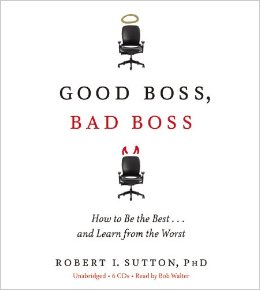
by Robert I. Sutton. 2010. New York: Business Plus. 252 pages.
Reviewed by Diane Byington, Ph.D.
If you're a boss, you'll probably want to have this book on your bookshelf, along with its predecessor, the best-seller The No Asshole Rule. After achieving success with the first book, Sutton decided to research and write about what distinguishes good bosses from bad bosses. He does an excellent job combining research, personal experience, and common knowledge into a readable and helpful set of suggestions for how to be a good boss.
Accordingly, the book is filled with lists telling you, in specific terms, how to succeed as a boss. Casually flipping through the pages, I see lists that include: The 11 Commandments for Wise Bosses, How to Lead a Good Fight, Tricks for Taking Charge, and A Recipe for an Effective Apology. I especially liked that one.
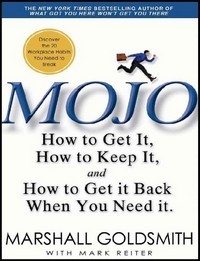
by Marshall Goldsmith. New York: Hyperion. 184 pages.
Reviewed by Diane Byington, Ph.D.
Are you burned out at work? Or, have you lost some enthusiasm and wish you could get it back? If so, check out this book. Marshall Goldsmith brings his long experience as an executive coach to the concept he describes as Mojo: that positive spirit toward what we are doing now that starts from the inside and radiates to the outside. In other words, we've got to feel enthusiastic toward what we are doing before we can send enthusiasm out for others to see. This book details how to increase your Mojo.
The most useful part of the book, for me, was his scorecard for measuring your Mojo. Goldsmith says we need to bring five qualities to an activity in order to do it well. These are: motivation, knowledge, ability, confidence, and authenticity. Likewise, five benefits we may receive from an activity include: happiness, reward, meaning, learning, and gratitude.
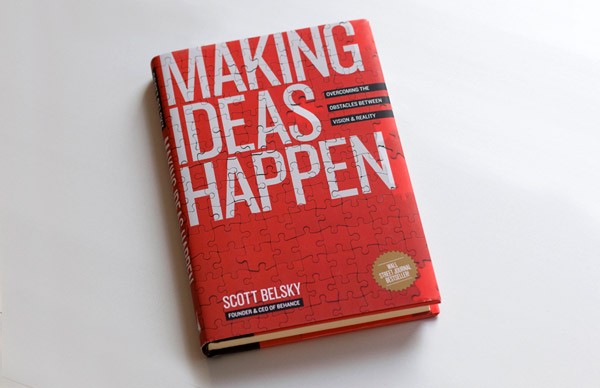
By Scott Belsky, Making Ideas Happen. (2010). New York: Penguin. 231 pages.
Reviewed by Diane Byington, Ph.D.
This book might be for you if:
You have lots of ideas but have trouble getting them to actually happen
You tend to be disorganized and need help organizing your projects
You are excited and full of energy at the beginning of a project but get bored and distracted as time goes by, or you love starting projects but rarely complete them
Your job is to manage creative professionals
Scott Belsky, CEO and Founder of the online creative network, Behance, has spent his professional life working with creative people and helping them to make their ideas "happen." His thesis is that great ideas abound, but getting them to completion is extraordinarily difficult and requires a different skill set than what is used to generate the idea. This book presents his ideas for what it takes to actualize an idea.
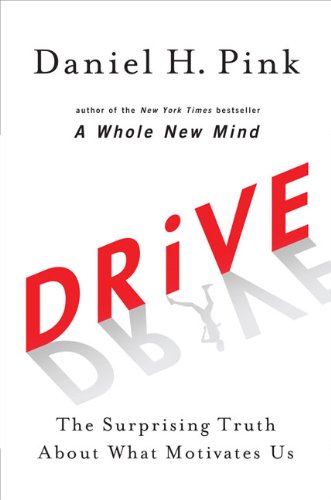
Daniel Pink, following up on his bestseller A Whole New Mind, picks up on another social trend that is growing in importance - a new way of motivating people. Here is his "cocktail party summary" of the book:
"When it comes to motivation, there's a gap between what science knows and what business does. Our current business operating system - which is built around external, carrot-and-stick motivators - doesn't work and often does harm. We need an upgrade. And the science shows the way. This new approach has three essential elements: (1) Autonomy - the desire to direct our own lives; (2) Mastery - the urge to get better and better at something that matters; and (3) Purpose - the yearning to do what we do in the service of something larger than ourselves."
Everyone I've spoken with about this book relates an experience working for the two types of leaders discussed in these pages. Around some leaders (the Multipliers) they feel confident about their abilities and are willing to work their hardest, whereas around other leaders (the Diminishers) they feel inept and are unwilling to contribute more than the minimum required to keep the job. Unfortunately, I heard many more stories about the problems of working for a Diminisher than the joys of working for a Multiplier. The focus of this book is understanding the difference between these two leadership styles and learning how to move from being a Diminisher to a Multiplier.
A Multiplier is defined as a leader who is able to understand and solve hard problems rapidly, achieve goals, and adapt and increase the team's capacity over time. A Diminisher is a leader whose team operates in silos, finds it hard to get things done, and despite having smart people, seems to not be able to do what is needed to reach goals.
Are you as tired of thinking about the dire economy, war casualties, and the oil spill as I am? Do you want to read something that is somewhat related to work, but easy and fun, and you won't feel guilty about spending the time? If so, then I recommend anything by Malcolm Gladwell. This writer has an amazing ability to find patterns out of things that others miss, and his writing is entertaining and stimulating. He's the guy who brought us the concept of the "tipping point," which describes the point at which the momentum for change becomes unstoppable. He's written several books, all million sellers, and I chose to read Outliers for this review.
An outlier, according to Gladwell, is something that is markedly different in value from others in a statistical sample. He primarily focuses on the stories of people who have had great success, including Bill Gates. Gladwell looks underneath the stories to find that success is partially about individual striving, but it also includes luck, taking advantage of opportunities that are denied to others, talent and smarts, and lots and lots of practice.
Paul Osterman brings his academic perspective from the MIT Sloan School of Management to the issue of what is happening with middle managers today. Basically, he finds that middle managers are insecure in their jobs, more loyal to their teams than to the larger corporation, and like the work they do. None of these conclusions will be a surprise to people who work within corporations, but the data-driven analysis gives his words some weight.
One of the most intriguing discussions in his book is the history and perceptions of middle managers in the overall culture. Early in the twentieth century, advances in technology permitted cheap production on a very large scale. Middle management was the key actor that facilitated the remarkable growth and efficiency of the American economy. Without middle management's coordination of production and distribution, firms could not grow big enough to take advantage of the technological potential of mass production and low unit cost. In other words, middle managers were heroes at first.
Daniel Pink opens our minds and shows us new possibilities in this entertaining book about how the right brain can contribute in a world that has long been devoted to left brain thinking. He begins by reviewing how the two halves of the brain work: the left hemisphere is sequential, analytical, verbal, and detail-oriented, while the right hemisphere processes information simultaneously, specializes in context, understands metaphor and nonverbal cues, and synthesizes the big picture. Pink's thesis is that right-brain directed thinking, so often disdained and dismissed, will increasingly determine who soars and who stumbles.
He explains the reasons behind the shift from left to right brain dominance: abundance, Asia, and automation. In our abundance, we acknowledge that our left brains have made us rich. We can buy just about anything we want at a minimal price. This puts a premium on the aesthetic. For business, it's no longer enough to create a product that's reasonably priced and adequately functional. Now it must be beautiful, unique, and meaningful to be competitive.
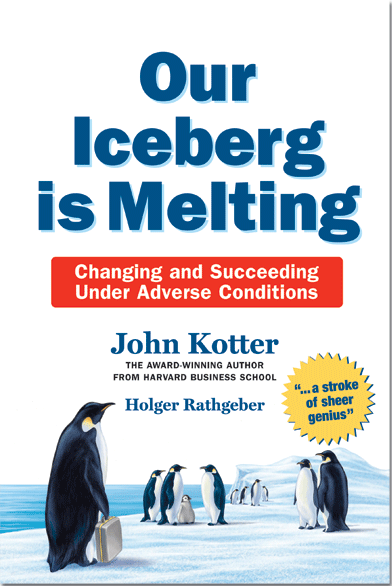
When was the last time a business book made you smile? I believe this book will put a smile on the face of even the most discouraged business person. It's a fable about a group of penguins whose iceberg may or may not be melting. If it melts it will break apart and leave the group homeless, and many penguins would die. Only Fred can see the potential disaster, but he's a nobody in the penguin colony. Fred finally gets an audience with Alice, one of the leaders, and he shows her the fissures and other symptoms of melting. Alice is amazed that she had managed to ignore the signs, and she takes the problem to the leadership council.
The leaders have a variety of reactions, like leaders in all organizations. Some of them debate the validity of Fred's statistics. One falls asleep. Another nods at everything because he is uncomfortable with numbers, but doesn't understand a thing. In desperation, Fred constructs a model of their iceberg that shows the problem, but even he cannot guarantee 100% that the iceberg is melting, only that it appears to be. The head penguins realize that they need to tell the rest of the colony about this potential disaster. They call a general meeting, with the purpose of reducing complacency and increasing urgency.
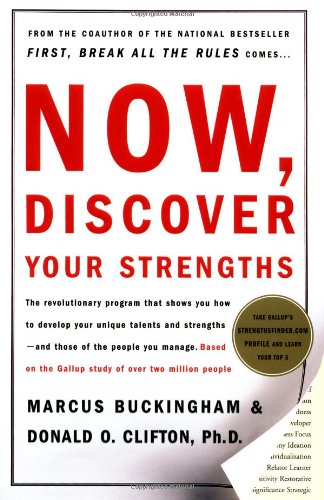
One of my favorite things about coaching people on their 360 feedback results is talking to them about their strengths. Invariably, when managers have studied their reports before talking with me, they are very clear about what they see as their weaknesses. They almost never notice or take stock of their strengths, which are just as obvious to me as their weaknesses are to them. So we spend some time identifying their strengths and talking about how these can be leveraged to manage weaker areas that might be impacting their performance and slowing their careers. People are usually grateful for these insights, which they might not have gotten on their own.
I was interested in reading this book because I hoped it would be one I could recommend to people when they receive their feedback reports or who are learning to lead and manage others. Unfortunately, it didn't live up to my hopes, even though it has some useful information. Let me address the book's strengths first.