BLOG
Insights on 360° feedback and leadership development

Insights on 360° feedback and leadership development

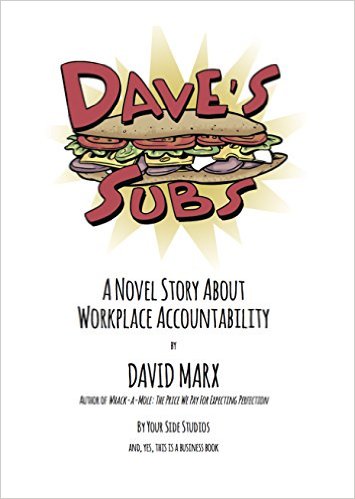
A late bread delivery. A new driver. An improperly stocked bread rack. A first-time customer. An employee’s first foray into covering as manager. An instinctive reach. A failure to confirm. It was a series of mostly unremarkable events. No evil actor. No intention to harm. Yet a customer with celiac disease had to be hospitalized when she was accidentally served a sub with regular bread instead of the gluten-free roll she’d requested.
Milo, the manager who’d been absent when the mistake occurred, is tasked with figuring out how to make sure nothing like that ever happens again. And so he begins a journey into learning about workplace accountability. We follow along, happy it’s his problem and not ours.
This little book should be on every leader’s desk—not stuck under a pile of papers, but sitting on top, ready to be consulted every day. It’s well-written, filled with practical suggestions you can implement right away, and thought-provoking.
Corporate voice boils down to whether employees hold back important work-related information that could inform decisions and problem resolutions, or whether they experience the safety, confidence, and trust that encourages them to contribute their fullest. Employees in a culture of silence may perform their jobs, but they will do so as a matter of obedience or resignation. They don’t go out of their way to give their best efforts or to solve problems, even if they have good ideas, mainly because they don’t think leaders will listen to them or value them.
Employees in a culture of voice, on the other hand, contribute their fullest, resulting in open, honest, and healthy communication and innovative problem solving. They are willing to expand their efforts to meet organizations’ goals and advance business objectives beyond fulfilling the basic requirements of their jobs.
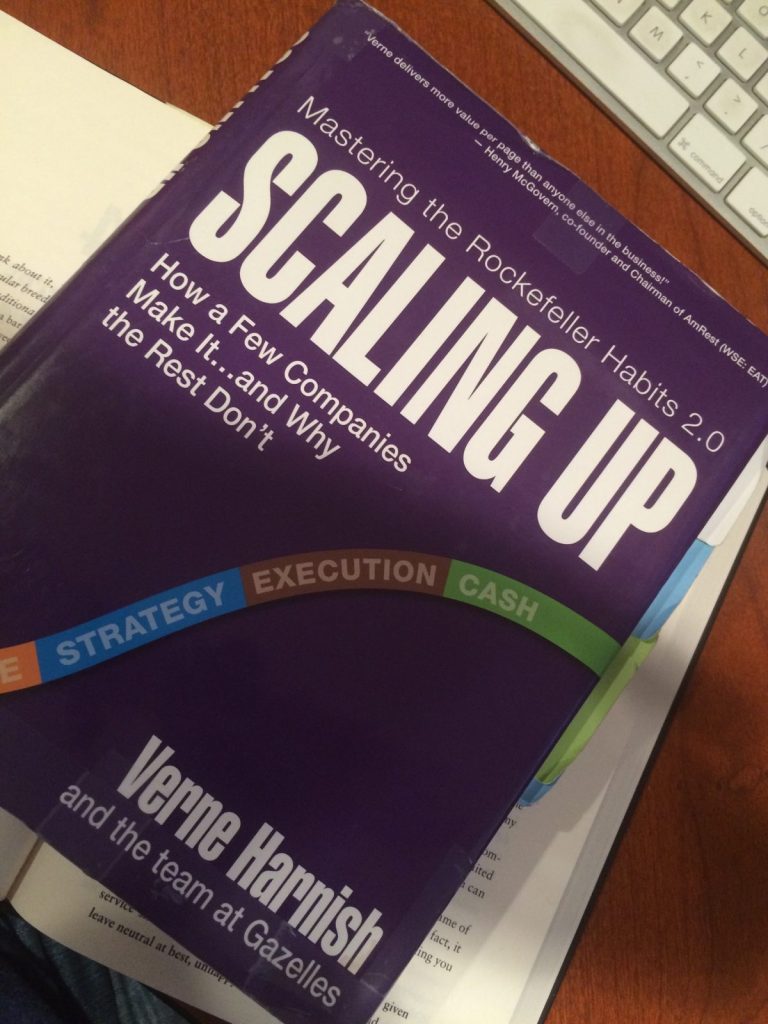
This is not one of those books you’ll read from cover to cover while sipping a cup of coffee with your feet up on your desk. It’s more of a textbook, or a workbook, for CEOs and their executive teams to work through issues involved in scaling up their businesses. The first chapter is an executive summary, and the author describes its fast pace and many lists as “drinking from a fire hose!” It’s intense, so keep both feet on the floor. The ideas in the rest of the book are served up in more bite-sized pieces, although it never really slows down.
Harnish describes the keys to scaling up as: attracting and keeping the right people; creating a truly differentiated strategy; driving flawless execution; and having plenty of cash to weather the storms. Accordingly, there are sections devoted to each of these topics. Each section has at least three chapters and numerous worksheets to be completed. I think, if you work your way through the book, you’ll be happy you did.
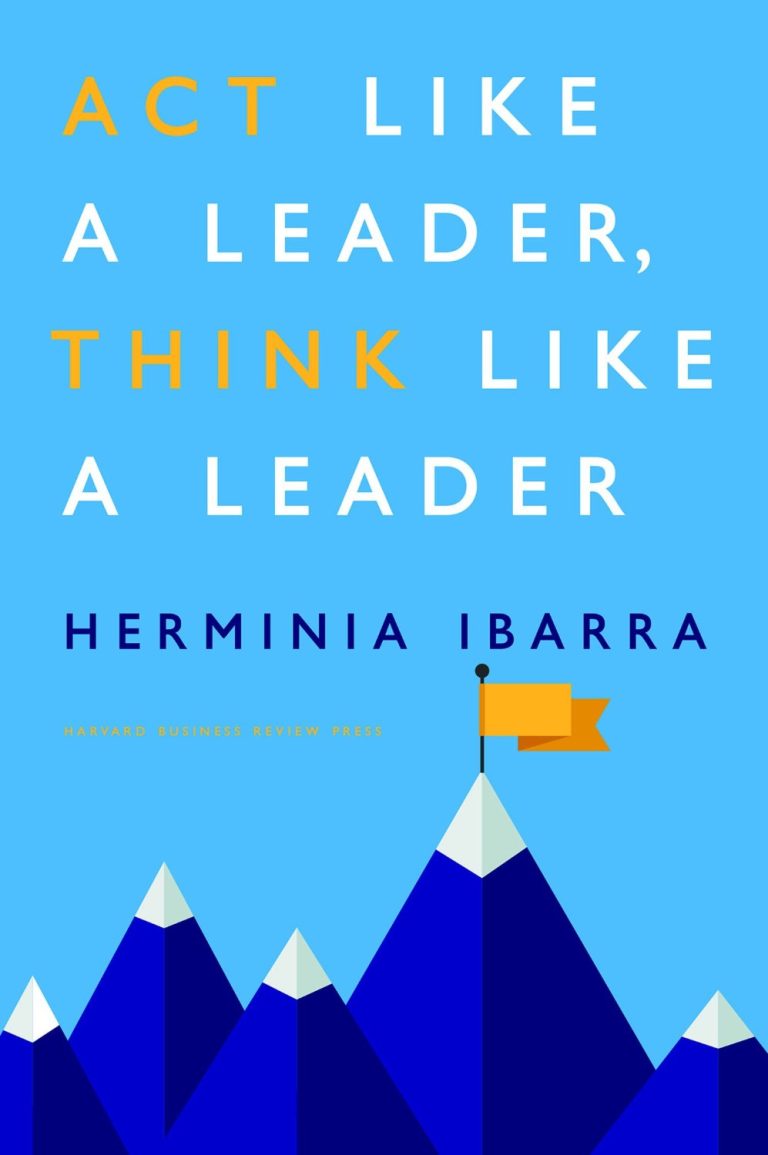
Herminia Ibarra is the director of a prestigious executive leadership program, and her new book is designed to help managers at all levels step up to leadership. Making small but crucial changes in your job, your networks, and yourself can lead to enhanced leadership opportunities. She bases the book on the “outsight” principle, which holds that the only way to think like a leader is to first act: to plunge yourself into new projects and activities, interact with very different kinds of people, and experiment with unfamiliar ways of getting things done. In other words, change happens from the outside, rather than from the inside out.
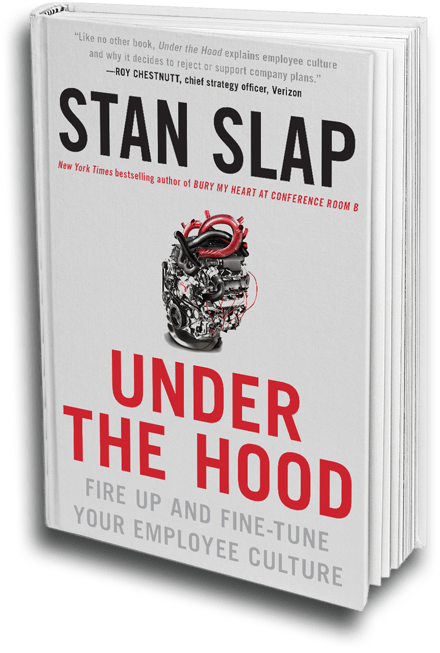
Stan Slap, management consultant and keynote speaker par excellence, has a new book. It’s called Under the Hood, and it’s about employee culture; specifically, how management objectives can be either supported or sabotaged by the employee culture. Slap’s definition of employee culture is: “Your employees’ shared beliefs about the rules of survival and emotional prosperity.” An employee culture exists to protect itself; it is an information-gathering organism, designed to assure its own survival.
Which means it is anti-change, because change—including positive change--could threaten its very survival. You, even as a first-level manager, are not part of the employee culture. Instead, you are the key influencer of the culture’s survival and emotional prosperity.
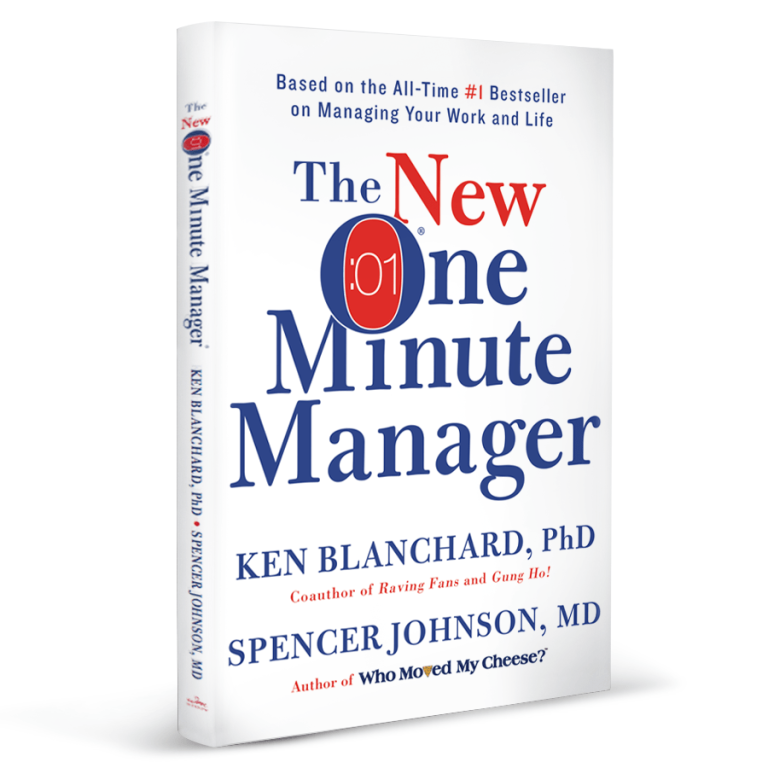
Chances are you’re one of the 15 million people who have read the original One Minute Manager published in 1982. It’s a small book that requires only about an hour to read and uses a parable to teach three crucial management skills (called “secrets”) that, once learned, will probably stick in your memory forever. So why revise such a valuable resource? I was curious, so I compared The New One Minute Manager with the original version.
Are you new to your job and feeling out of your depth and overwhelmed? If so, you probably have more to offer than you realize. In a rapidly changing world, being new, naïve, and even clueless can be an asset. According to author Liz Wiseman, the willingness to learn can be more valuable than mastery, and rookie smarts is often more beneficial to an organization than veteran comfort.
Wiseman doesn’t suggest that experience is a bad thing. Nobody wants their airline pilots, or their bridge builders, or their concert pianists to be rookies. But, while experience provides a distinct advantage in a stable field, it can actually impede progress in an unstable or rapidly evolving arena.
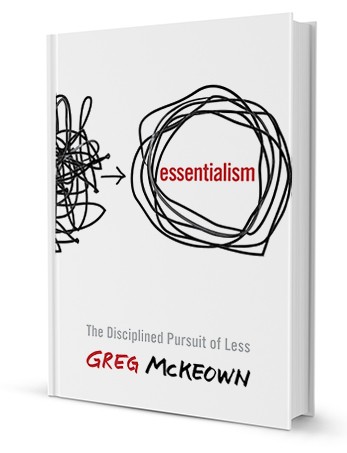
At social occasions I hear a similar complaint repeated over and over: “I’m too busy. I’ve got to find some way to cut down on some of my activities.” I recommend the new book Essentialism, by Greg McKeown, as a way to decide which activities to cut and which to keep.
According to McKeown, Essentialism is not about how to get more things done; it’s about how to get the right things done. It doesn’t mean just doing less. It’s about doing only what is essential so you can operate at your highest point of contribution.
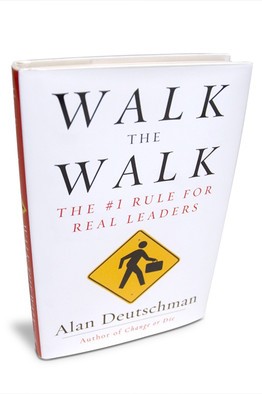
by Alan Deutschman. (2010). New York: Portfolio/Penguin. 182 pages.
Reviewed by Diane Byington, Ph.D.
Deutschman starts out with a little-known story about Martin Luther King, Jr. In 1962, King was speaking at a gathering of the Southern Christian Leadership Conference and, in the middle of his speech, a white man jumped on the stage and punched him in the face several times so hard that he staggered backward and spun half around. He managed to turn back to face his assailant and then he dropped his arms, refusing to defend himself. The man was pulled away, but King insisted on talking to him privately, and he refused to press charges. King's speech at that meeting was on nonviolence, but his refusal to fight back inspired his followers far more than his eloquent words.
Deutschman's proposition is that we need to see our leaders "walking the walk" as well as "talking the talk" if we are going to be willing to follow them through difficult circumstances. As a journalist, he has a suitcase full of stories about leaders who successfully walked the walk, and as a result made significant changes in their environments. The stories were fun, and included tales that ranged from Eleanor Roosevelt to Jeff Bezos of Amazon, and a host of others. Reading these stories was the best part of the book.
by Al Watts. (2010). Minneapolis, MN: BRIO Press. 170 pages.
Reviewed by Diane Byington, Ph.D.
Reading this small book is like snuggling up with a friend next to a fire on a winter evening, sipping a glass of your favorite wine, and listening to him tell you the accumulated wisdom of his life. Al Watts is a veteran consultant who focuses on organizational integrity and also provides dynamite team-building lessons on board his sailboat. He combines these two passions in his new book.