BLOG
Insights on 360° feedback and leadership development

Insights on 360° feedback and leadership development
You don't have to be a control-freak to have heard some truth in the phrase "if I want it done right, I have to do it myself." While the base thought may indicate an admirable expectation of excellence, you - no one - can be everywhere and doing everything, either in their business or in their lives. There is no need to be a superhero. Besides, even Batman has Alfred and Robin.
The good thing is, you don't have to do it all! Delegating to others is not only helpful, it is crucial for success.
Keep in mind, delegating is more than handing out "stuff off your to do list." People want more than a salary from their jobs, they want satisfaction, opportunity, growth. Effective delegation not only helps you get things done, it also helps provide those who work with and for you opportunities for personal and professional growth, and increased job satisfaction.
There are three types of bosses when it comes to employee morale: the boss who is very focused on keeping morale high, the kind who is solely worried about the job and neglects the morale aspect and lastly, the clueless boss which has the best of intentions for employee morale, but still inadvertently destroys it. Whichever you may be, morale is essential for employee retention, good productivity and a healthy work environment. If you feel like your workplace lacks any of these aspects, maybe it's time to reevaluate how you handle your employees.
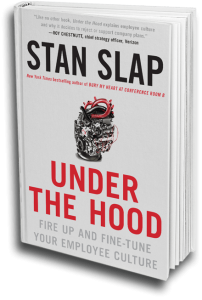
Stan Slap, management consultant and keynote speaker par excellence, has a new book. It’s called Under the Hood, and it’s about employee culture; specifically, how management objectives can be either supported or sabotaged by the employee culture. Slap’s definition of employee culture is: “Your employees’ shared beliefs about the rules of survival and emotional prosperity.” An employee culture exists to protect itself; it is an information-gathering organism, designed to assure its own survival.
Which means it is anti-change, because change—including positive change--could threaten its very survival. You, even as a first-level manager, are not part of the employee culture. Instead, you are the key influencer of the culture’s survival and emotional prosperity.
When you own a business, motivation and communication become two of your biggest tools when working with your employees. These two concepts go hand in hand when you want your employees to become a trusted aspect of your business. The most important way to keep your employees motivated is to communicate with them. Let them know what’s going on with your company and make them a part of the decision-making process.
How does your company empower its employees? Many times, this question elicits solutions and actions: we implement open door policies with management; we conduct semi-annual performance reviews; we offer flexible work schedules and the opportunity to work remotely.
While all of these solutions can contribute to employee empowerment, it's important that any employee-focused program starts by answering the right question.
You work hard, present new ideas, and take the initiative every chance you get thinking that you'll be sure to get that promotion when it comes around. Gathering up the courage to ask for a promotion is a big deal, and hearing "no" can make you want to crawl into a corner and never return to work again. However, you know that you need to act like a professional, so treat this as a learning experience so that you can have a chance at a promotion the next time around.
Do you work for someone who thinks they have all the answers, but has little patience for the ideas of others? Do they have an opinion about everything and will share it regardless of its value to the project? Having to deal with a know-it-all in the workplace is an all-too common problem. Dealing with this type of personality can be difficult – especially when the know-it-all is your boss. Here are three tips to keep in mind that will help make your interactions with a know-it-all boss easier to manage.
In today’s fast-paced, technologically driven society, the marketplace can change on a dime. Businesses that not only succeed but thrive are the ones that can adapt to—or, even better, anticipate—change with as little effort as possible. Which means that, keeping your business running at “business as usual” status won’t allow you to grow.
The price of being stagnant is remarkably high. If your company is sluggish to adopt new ideas or new thinking, be aware that your competitors aren’t. They are out there working on not just the ideas for a better tomorrow, but the ones for a better next week, and with that thinking, they’re winning more of your customers. And making your business obsolete.
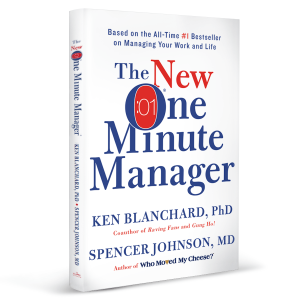
Chances are you’re one of the 15 million people who have read the original One Minute Manager published in 1982. It’s a small book that requires only about an hour to read and uses a parable to teach three crucial management skills (called “secrets”) that, once learned, will probably stick in your memory forever. So why revise such a valuable resource? I was curious, so I compared The New One Minute Manager with the original version.
You’re going about your business, involved in the same-old, same-old—wake up, go to work, come home, go to bed, repeat. Then one day, BAM! You do a little self-examination and realize that, for weeks (maybe months?), you’ve been feeling exhausted, you haven’t been very motivated, you’ve been irritable with and withdrawn from coworkers as well as family and friends. You realize that some health issues have crept up. You find that you’re preoccupied with work, even when you’re not at work; yet you see that your job performance has slipped and that, in fact, you’re no longer actually satisfied with your job.