BLOG
Insights on 360° feedback and leadership development

BLOG
Insights on 360° feedback and leadership development
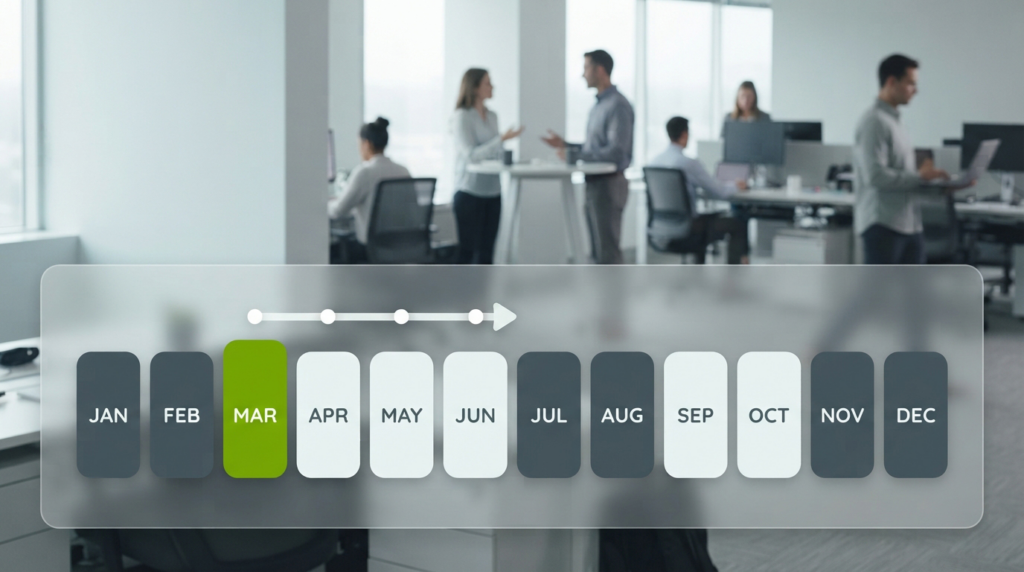
For many teams, late fall is when next year’s development calendar gets written, and somewhere on that calendar sits a line that says “360.” Picking the month looks like the easy part. The usual approach is to pick a launch date, check it against the holidays, and move on.
The trouble is that a launch date only covers the first week. The best time to run 360 feedback is the window where the whole sequence can land: raters with time and context to answer well, a report that arrives when someone can act on it, a debrief that actually gets booked, and a follow-up conversation that happens before the work year swallows it. A 360 that launches on a good day and debriefs on a bad one has picked the wrong month.
So instead of asking “when should the survey go out?”, we suggest four checks. Run them in order and the right window usually narrows to one or two choices.
According to our FAQ, most 360 projects with our team are completed within two to three weeks, depending on group size, customization, and the reports or coaching included. Add the first 30 days after the report, which our follow-up framework lays out in five steps, and a single cycle needs something closer to two months of ordinary working weeks.
Two months is long enough to run into something. A review cycle, a fiscal year-end, a reorganization, a holiday stretch. The four checks are a way to see those collisions before they happen.
Look for the performance review and compensation cycle first, and keep the 360 well clear of it.
Raters and managers behave differently when they believe a rating might affect pay. The CIPD’s 2022 evidence review on performance feedback found that managers rate employees very differently for administrative purposes (such as pay decisions) than for developmental ones, and that using the same evaluations for both is likely to be unfair. That review focuses on manager feedback rather than multi-rater feedback, but the timing lesson carries. If raters complete a development 360 in the same weeks they are writing or receiving reviews, the line between the two conversations blurs, whatever the invitation email says.
Our recommendation is distance: enough weeks between the two that raters experience them as separate events. We have written before about the risks of linking 360 data to appraisals.
Next, look at the calendar from the raters’ side. Two questions matter.
Will raters have time? Quarter-end closes, peak sales periods, budget season, and other surveys all compete for the same attention. Our post on rater fatigue uses a 10-person team as the example: if everyone on that team is a participant, each person completes 10 surveys plus a self survey. Put that load in the busiest month of the year and the ratings tend to get rushed. Staggering invitations helps, and so does choosing a quieter month.
Will raters have context? Our rater selection guidance asks for raters who have had consistent professional interactions with the participant for at least three months. A month right after a reorganization, a merger, or a big hiring wave can leave whole rater groups short of that bar. If a restructure lands in March, a May launch may be too early for the new teams to rate each other well.
This is the check that is easiest to skip. Count forward from launch to where the debrief and the first follow-up land, and make sure those weeks are working weeks.
Here is the pattern to watch for. A 360 launches in late November. Reports arrive in mid-December, right as people leave for the holidays. Debriefs slide into January, where they compete with planning and, in many organizations, the review cycle you were trying to avoid. By the time the leader sits down with a coach or a manager, the results are six weeks old and the energy that comes with fresh feedback has faded.
So pick the launch date by working backward from the debrief. If you know when leaders and their managers can realistically sit down together, the launch date falls out of the math.
Last, ask what the 360 is attached to.
If the 360 supports a leadership program, it usually works best as a baseline taken before the program starts, so the debrief can shape what each leader focuses on. Launch it during the program and leaders get their results after they have already chosen their goals.
Then think one cycle ahead. We recommend reassessing with a full 360 every 12 to 18 months, so the month you choose now sets the pattern for the next one. A month that works this year but collides with a review cycle next year is a problem you have scheduled in advance. If you want a read between full cycles, a pulse check can fill the gap without a full rater cycle.
Consider a hypothetical HR director with budget left in the fourth quarter. The plan on the table is to launch in November and “get it done this year.”
Run the checks. The Review Check flags January reviews. The Rater Check flags year-end closes in finance and sales. The Debrief Check shows reports arriving just before the holidays and debriefs drifting into the review window. Three of four checks fail.
A better plan is to make the decisions in the fourth quarter (the assessment, the participant list, the rater guidance) and launch in a clean window after the review cycle settles. The budget question and the calendar question are separate, and treating them as one is how a good program ends up in a bad month.
Every organization has a busy season, and global programs have to work around holiday calendars that differ by country. The goal is the least crowded window, not an empty one. If two months pass all four checks, choose the one that gives the debrief the most room.
Should all participants in a cohort run at the same time?
For a cohort tied to a program, yes, usually. A shared window keeps the debriefs and follow-up on one schedule and gives you a cleaner group view of the results. Rolling launches suit individual development, such as a newly promoted leader, where the timing should follow the rater groups rather than the calendar.
Can we run a 360 in December?
You can, if the debriefs are booked before people leave. If they can’t be, a January launch after the holidays will usually serve leaders better.
The right month is the one where the ratings, the report, and the conversation all fit. If next year’s calendar is on your desk now, take a look at our 360 degree assessments, or talk with our team about where your 360 fits.