BLOG
Insights on 360° feedback and leadership development

Insights on 360° feedback and leadership development
Embattled NFL Commissioner Roger Goodell is learning about it—the fallout that comes from losing trust. In his case, he’s losing it because of missteps, unclear responses to issues, and potential lies. But he’s not just facing the fallout from the football organization solely, he’s facing it from the true people who pay him: NFL fans.
Trust is the cornerstone of all good relationships, both inside and outside of the office. Notwithstanding, it can be human nature to make mistakes—inadvertently or even unknowingly at times. At which point begins the task of rebuilding employees’ confidence in worthiness and ability. It can be a difficult and long journey, but the good news is that it’s not impossible. If you find yourself needing to re-create a platform of trust with your employees, here are some things to keep in mind.

by Al Watts. (2010). Minneapolis, MN: BRIO Press. 170 pages.
Reviewed by Diane Byington, Ph.D.
Reading this small book is like snuggling up with a friend next to a fire on a winter evening, sipping a glass of your favorite wine, and listening to him tell you the accumulated wisdom of his life. Al Watts is a veteran consultant who focuses on organizational integrity and also provides dynamite team-building lessons on board his sailboat. He combines these two passions in his new book.
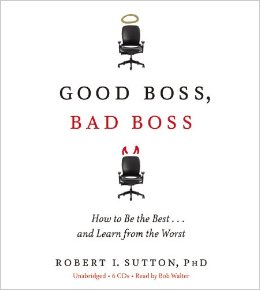
by Robert I. Sutton. 2010. New York: Business Plus. 252 pages.
Reviewed by Diane Byington, Ph.D.
If you're a boss, you'll probably want to have this book on your bookshelf, along with its predecessor, the best-seller The No Asshole Rule. After achieving success with the first book, Sutton decided to research and write about what distinguishes good bosses from bad bosses. He does an excellent job combining research, personal experience, and common knowledge into a readable and helpful set of suggestions for how to be a good boss.
Accordingly, the book is filled with lists telling you, in specific terms, how to succeed as a boss. Casually flipping through the pages, I see lists that include: The 11 Commandments for Wise Bosses, How to Lead a Good Fight, Tricks for Taking Charge, and A Recipe for an Effective Apology. I especially liked that one.
Good leaders should want their employees to not only succeed but also push their limits and raise the bar. One way that can help employees get there, is through regular goal-setting. This can be challenging because often times, employees don’t understand the overarching visionand goals of a company or organization. So it’s important that all players are aligned on the corporate vision in order to effectively start with the goals process. With that firmly in place, a manager can try to push his or her employees by suggesting stretch goals—the type of target that may seem impossible.
There are differing views of the efficacy of stretch goals. Some feel that setting the bar too high can cause dejection, making people feel like they’re getting nowhere and that they’ll never achieve the mark. Some studies even suggest that, with impossible goals in place, people become more and more dishonest or even ruthless in their pursuit of results—which has been shown to cost companies billions each year. Others, however, feel that, particularly for top performers (who are already driven to achieve and succeed), stretch goals can be motivational, and a huge reward in and of themselves once they are achieved.
Are you a micromanager? Or—perhaps worse—you may be one and not realize it?
Here are 5 signs you might be too involved in your employees’ work:
- You rarely delegate (and when you do, you are entirely too nervous about it)
- You find yourself spending more time overseeing (or even doing) other people’s projects than on getting your own done
- You nitpick the details (like putting the cover sheets on the TPS reports) and neglect the 30,000-foot view
- You reassign projects—to yourself—before they’re done
- You discourage autonomy and decision-making at any level under yours
Adding leadership competencies to your manager’s skills Many organizations are struggling with the transition into a global economy, forcing them to flatten their management hierarchy. As a result, today’s managers…
Alright, 360 Assessments do not fall into the testing category that you can “Ace”, however there are steps you can take to ensure that you are getting the most out of your 360 Assessment. Here’s one question to get you started:
Which of the following will help you get the most out of a 360 feedback program?
Acknowledge the Process – Feedback is a positive thing and should be used as a development tool. If you go into a 360 assessment with this in mind, you will get out of it what you put into it, which should be a clear and concise view of your strengths and weaknesses within your organizational culture. Feedback will tell a story, not fiction, and it’s up to you to listen to it. But awareness is only the first step.
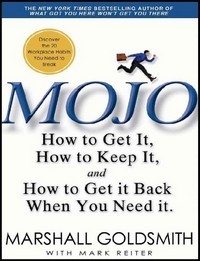
by Marshall Goldsmith. New York: Hyperion. 184 pages.
Reviewed by Diane Byington, Ph.D.
Are you burned out at work? Or, have you lost some enthusiasm and wish you could get it back? If so, check out this book. Marshall Goldsmith brings his long experience as an executive coach to the concept he describes as Mojo: that positive spirit toward what we are doing now that starts from the inside and radiates to the outside. In other words, we've got to feel enthusiastic toward what we are doing before we can send enthusiasm out for others to see. This book details how to increase your Mojo.
The most useful part of the book, for me, was his scorecard for measuring your Mojo. Goldsmith says we need to bring five qualities to an activity in order to do it well. These are: motivation, knowledge, ability, confidence, and authenticity. Likewise, five benefits we may receive from an activity include: happiness, reward, meaning, learning, and gratitude.
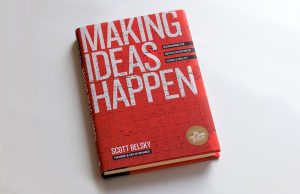
By Scott Belsky, Making Ideas Happen. (2010). New York: Penguin. 231 pages.
Reviewed by Diane Byington, Ph.D.
This book might be for you if:
You have lots of ideas but have trouble getting them to actually happen
You tend to be disorganized and need help organizing your projects
You are excited and full of energy at the beginning of a project but get bored and distracted as time goes by, or you love starting projects but rarely complete them
Your job is to manage creative professionals
Scott Belsky, CEO and Founder of the online creative network, Behance, has spent his professional life working with creative people and helping them to make their ideas "happen." His thesis is that great ideas abound, but getting them to completion is extraordinarily difficult and requires a different skill set than what is used to generate the idea. This book presents his ideas for what it takes to actualize an idea.
In most relationships, people want to have trust—with a romantic partner, with a family member, with a doctor or a dentist, with a mechanic or a plumber. In those relationships, without trust as a foundation, much can fail. Shouldn't we see it the same in the workplace? After all, a company’s success is based on trust—consumers must trust the brand, and employees, who, in essence, sell trust to consumers, most definitely need to trust their leaders. CommuniCon, Inc., says that “high-trust organizations have increased value, accelerated growth, enhanced innovation…and improved collaboration.” So why is it that, according to the 2013 Edelman Trust Barometer, 82% of people don’t trust business leaders to tell the truth? If you’re a leader in your company, that statistic should be alarming.
Luckily, it’s never too late to start building, earning, and increasing trust, and one basic building block is communication. Note that word well, though, because too often, leaders confuse the skill—communication—with its vehicles—communications. Gaining trust is not about which channels you use. It’s about the messaging—and the truth behind it—itself.